


DIAMOND BUYING GUIDE
Buying a diamond is one of life’s most meaningful purchases.
From the famous 4Cs to diamond shapes, certification, and insider buying tips, this complete guide will help you understand everything you need to know before you choose the perfect diamond.
Your quick diamond checklist
The 4Cs: cut, colour, clarity and carat
CARAT
Carat (often abbreviated as 'ct') refers to the weight of a diamond and not its actual size. The larger the carat weight, the greater the diamond's value. Note, however, that two diamonds of the same carat weight can vastly differ in price due to the quality of their cut, colour and clarity.
What is a carat?
One carat is equal to a fifth of a gram. A carat is divided into 100 points so a 50 point diamond is the same as a 0.50 carat diamond, which is the same as a half carat diamond.
Does size matter?
Don't confuse carat weight with visual size. A deep stone can have a smaller spread but still weigh 0.50 carat. The shallow, wide diamond will appear larger to the eye than the deeper stone. Similarly, some diamond shapes maximise carat weight: elongated diamond shapes, such as the emerald cut, tend to appear larger than round diamonds of the equivalent carat weight and quality of cut. And some jewellery settings enhance the diamond giving it the illusion of being larger than it is.
What does total carat weight mean?
The carat weight stated for a piece of diamond jewellery with multiple stones is the total weight of all the diamonds in it. For example, in a pair of 0.25 carat diamond solitaire earrings, the two stones have a combined weight of 0.25 carat. If a diamond engagement ring has one central diamond surrounded by smaller stones, the carat weight quoted takes into account the entire collection of diamonds.
What carat weights are available?
Diamonds are often cut to popular standard diamond weights. In the UK, these are typically 0.25 carat (quarter carat), 0.33 carat (third carat), 0.50 carat (half carat), and 1.00 carat (one carat). Diamonds can be cut to just under these weights, such as 0.23 carat or 0.49 carat, if the cutter feels that this will maximise the rough stone's beauty. At Fraser Hart we state the minimum carat weight of a diamond ring or a piece of jewellery so that you know you'll be buying a diamond of at least this weight.
COLOUR
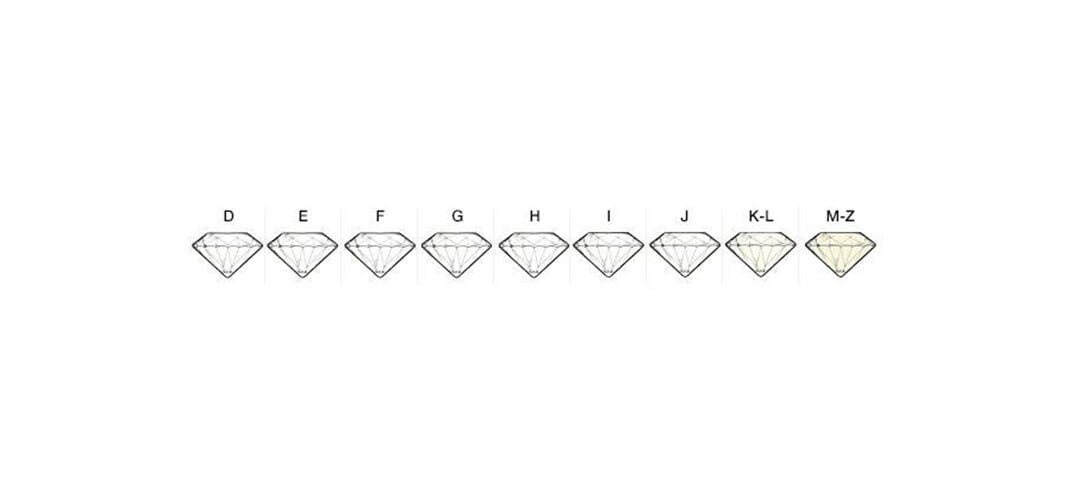
Colour describes how colourless a diamond appears. Diamonds are graded on a scale from D (colourless) to Z (light yellow or brown). Colour can affect both the look and value of a diamond, so it’s worth balancing it with cut for overall brilliance.
- D–F (Colourless): No obvious colour; the rarest grades.
- G–J (Near colourless): A slight warmth that’s usually hard to notice once set.
- K–M (Faint colour): Noticeable warmth, especially in white metal settings.
- N–R (Very light colour): Clear colour tint visible to most eyes.
- S–Z (Light colour): Stronger tint and typically lower priced.
Personal preference matters here — some people love a slightly warmer tone. At Fraser Hart, we list diamond colour grades on certificated diamonds.
CUT
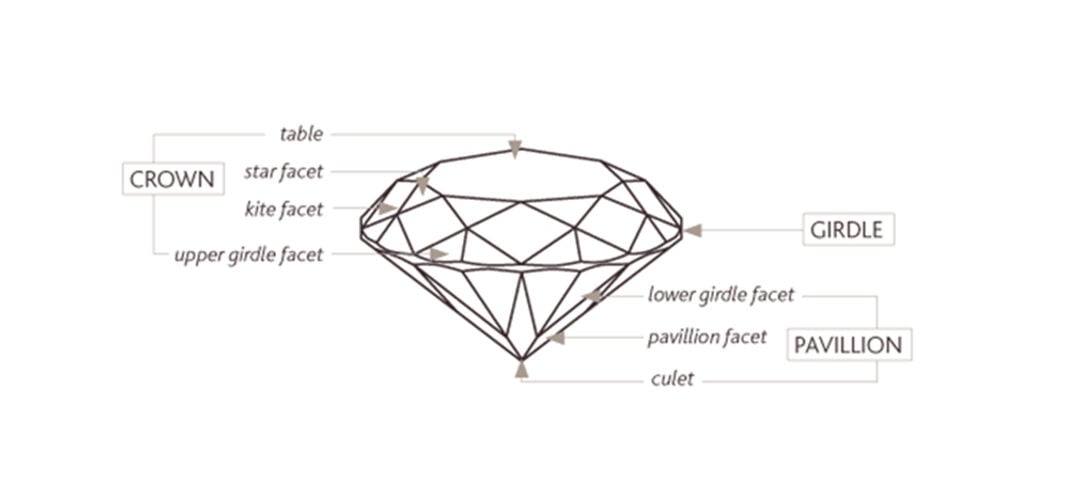
Cut is what gives a diamond its sparkle. It’s all about how well the stone’s angles and facets are made to reflect light back to your eye — which affects brightness, fire and overall brilliance.
- Proportions: The angles and measurements that control how light moves through the diamond. Better proportions usually mean more sparkle.
- Symmetry: How precisely the facets line up and mirror each other. Good symmetry helps the diamond look balanced and bright.
- Polish: How smoothly each facet is finished. Higher polish improves the diamond’s crisp look and light performance.
- Cut grade: An overall rating from the certificate (where available) that reflects how well the diamond is cut, based on proportions plus finish.
If you’re choosing where to spend, cut is often the best place to prioritise — it has the biggest impact on how a diamond looks day to day.
CLARITY
Clarity refers to tiny natural features found in most diamonds. These are called inclusions (inside the stone) and blemishes (on the surface). In general, the fewer and smaller they are, the higher the clarity.
What are inclusions?
Inclusions can be crystals of another mineral (or diamond), tiny fractures (often called feathers), clouds, needles or other internal characteristics formed as the diamond grew beneath the earth. They’re sometimes called nature’s fingerprints because they make each stone unique. Most inclusions aren’t visible to the naked eye, but their size and position can affect how light travels through the diamond.
How is clarity graded?
Clarity is graded by trained gemmologists using 10x magnification. They assess the size, number, location and type of inclusions, and how visible they are when viewed face-up (from the top).
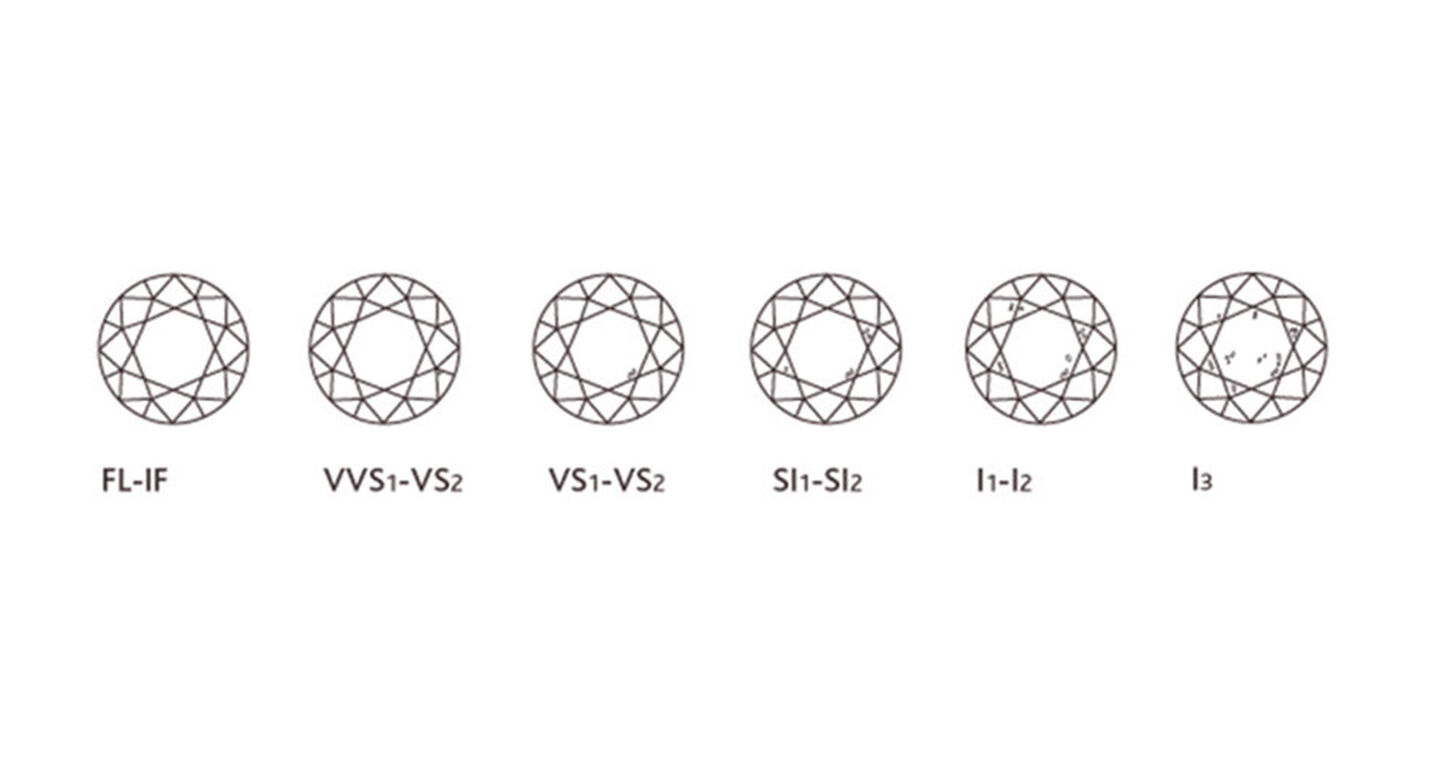
Clarity grades (highest to lowest):
- FL / IF: No inclusions visible at 10x (IF may have tiny surface features only).
- VVS1 / VVS2: Inclusions are extremely difficult to see at 10x.
- VS1 / VS2: Minor inclusions; difficult to see at 10x.
- SI1 / SI2: Noticeable inclusions at 10x, sometimes visible without magnification depending on the stone.
- I1–I3: Obvious inclusions that may affect brilliance and durability.
Diamond shapes
Diamond shape is all-important when you're buying a piece of diamond jewellery and even more so when it comes to buying a diamond engagement ring in which the sparkling gem takes centre stage. Every diamond shape has its own story and you should choose the shape that’s right for you and your story. Shape refers to the outline of the gem when viewed from above. All diamond shapes that are not round brilliant are known as fancy shapes. Fancy diamond shapes were developed to make the most of rough diamonds that didn't suit the classic round brilliant diamond.
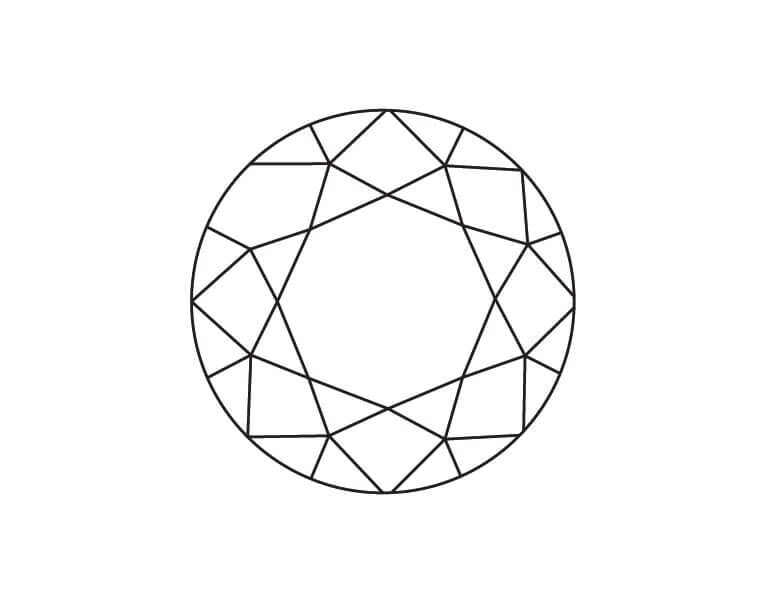 Round Brilliant
As the most traditional and popular diamond shape, the round brilliant accounts for almost half of diamonds bought today. The round brilliant diamond is cut to a round at the top and a cone at its bottom. Of all the diamond shapes available, it yields maximum return of light and therefore the most brilliance.
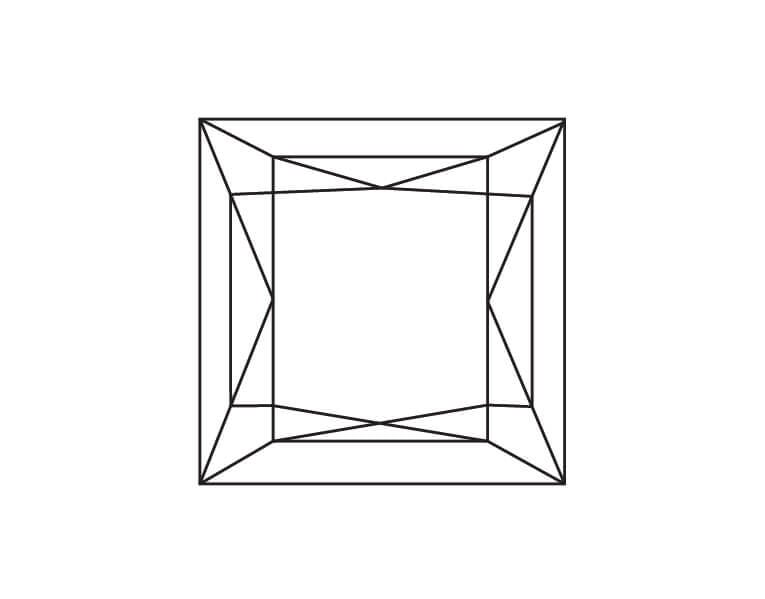 Princess Cut
A princess cut diamond is a type of diamond cut that is square or rectangular in shape and has pointed corners. It is a relatively modern diamond cut, first created in the 1960s. The princess cut diamond has become one of the most popular diamond cuts for engagement rings and other jewellery.
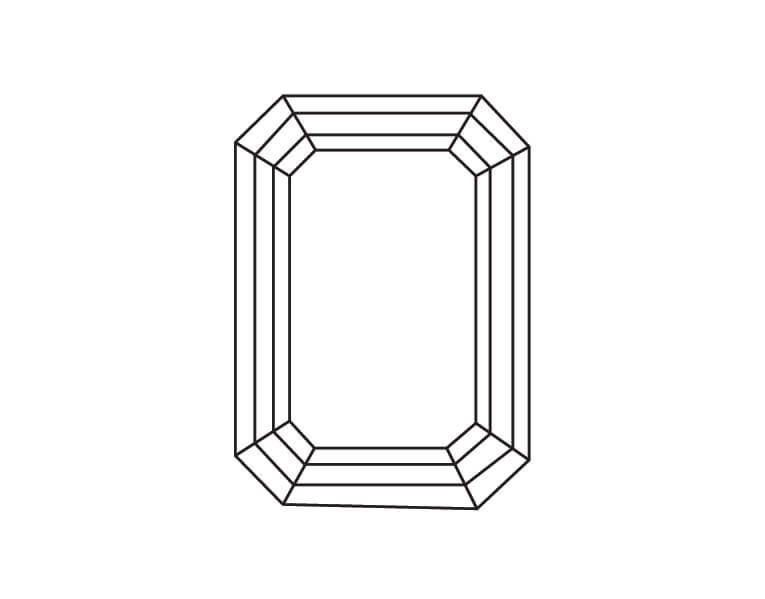 Emerald Cut
An emerald cut diamond is a type of diamond cut that is characterised by it's rectangular or square shape with truncated corners. This cut is named after the emerald gemstone, as it was originally used for emeralds, but it is now commonly used for diamonds as well.
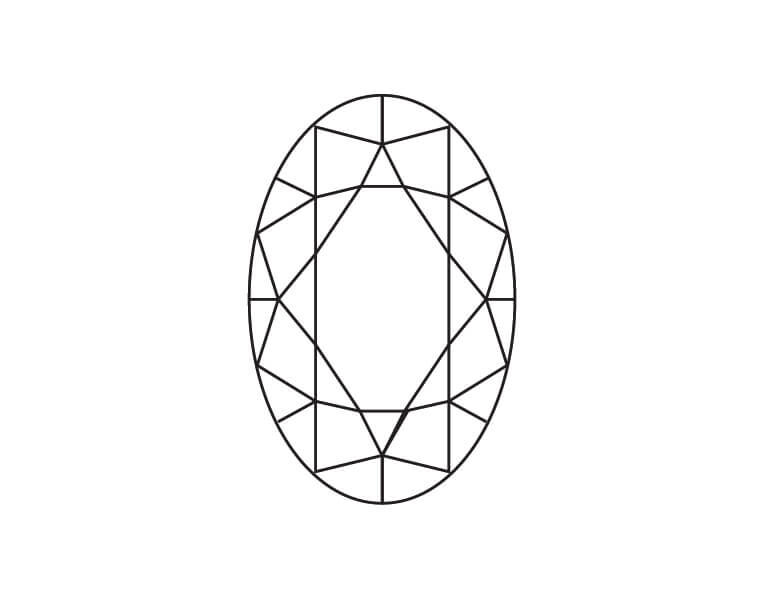 Oval Diamonds
Like the round brilliant cut, the oval diamond usually has 58 facets in a symmetrical cut that maximises the stone's brilliance. An oval diamond is therefore a fabulous choice if you want all the sparkle of the round brilliant diamond in a more unusual style.
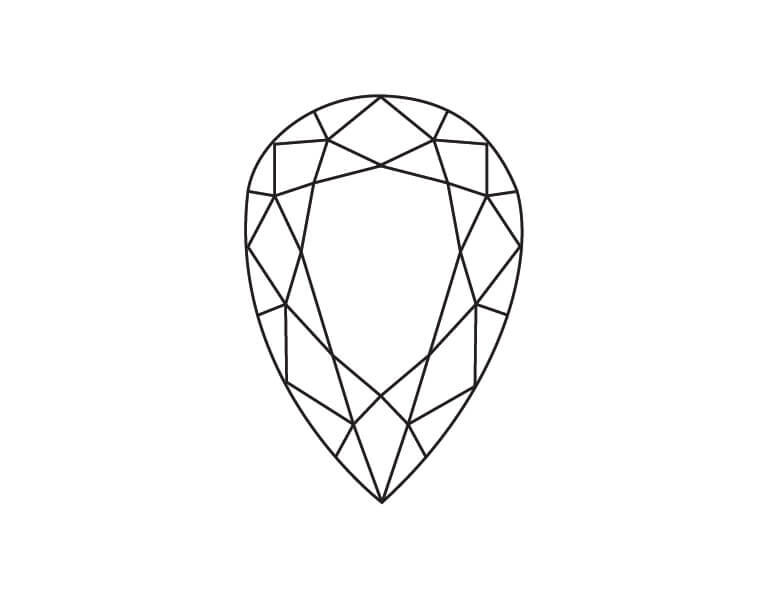 Pear Shaped Diamonds
Also known as teardrop, the pear diamond has a brilliant cut which optimises light reflection, and combines the shape of an oval and marquise diamond. Made famous by Elizabeth Taylor, the pear is a popular shape for diamond pendants and diamond earrings.
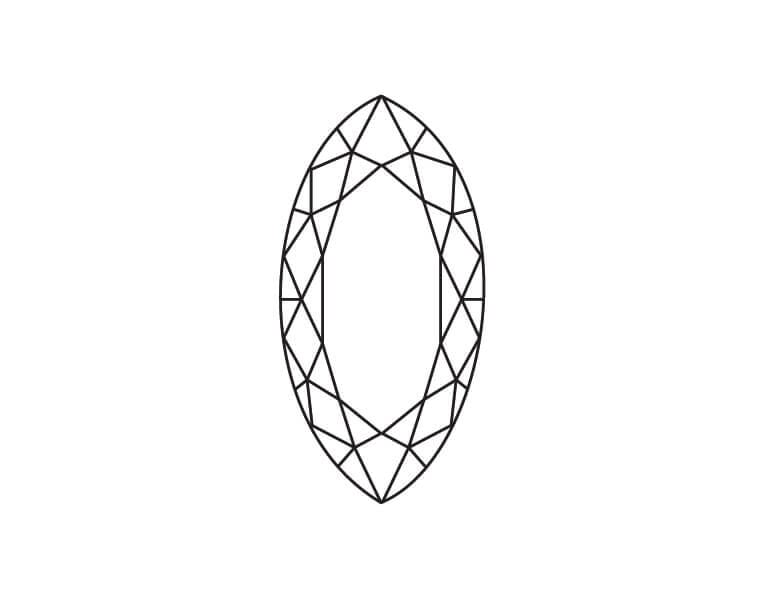 Marquise Diamonds
This diamond cut that is characterised by its unique boat-like shape, with pointed ends and a curved body. It is also sometimes called a navette cut, which means "little boat" in French. This diamond was named after the Marquise de Pompadour, mistress of King Louis XV.
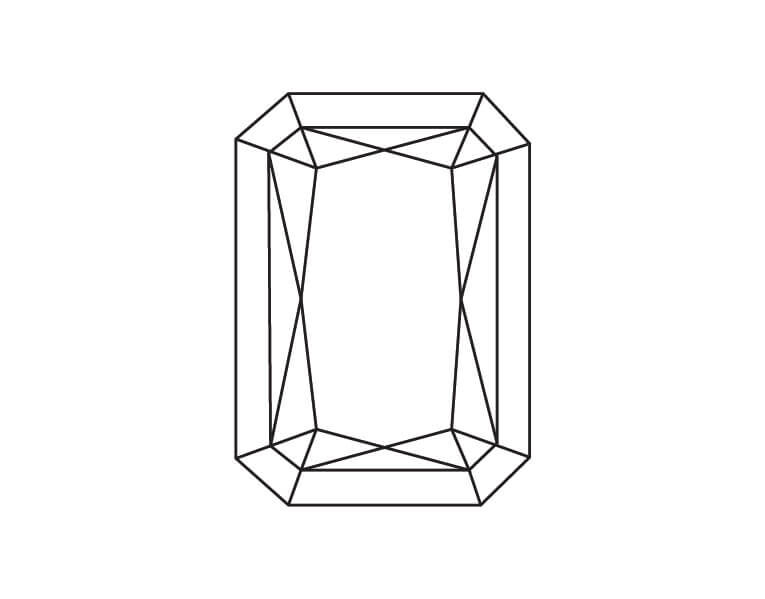 Radiant Diamonds
Radiant diamonds can be square or rectangular, and are distinguishable by cropped corners and 70 facets. They combine the brilliance of the round brilliant diamond and the depth of the emerald cut and princess cut diamond.
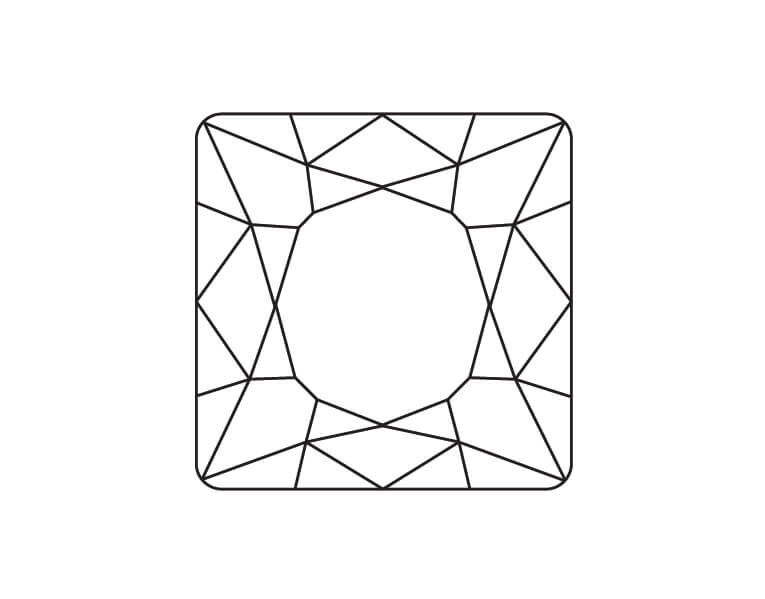 Cushion Diamonds
A cushion diamond is a type of diamond cut that is known for its square or rectangular shape with rounded corners, similar to a pillow or cushion. This cut is also sometimes referred to as a pillow cut.
 Heart Shaped Diamond
The heart shaped diamond is pear shaped with a cleft cut into its top. Relatively unusual, it is a complex cut with 56 to 58 facets and demands a great amount of skill to ensure maximum brilliance.
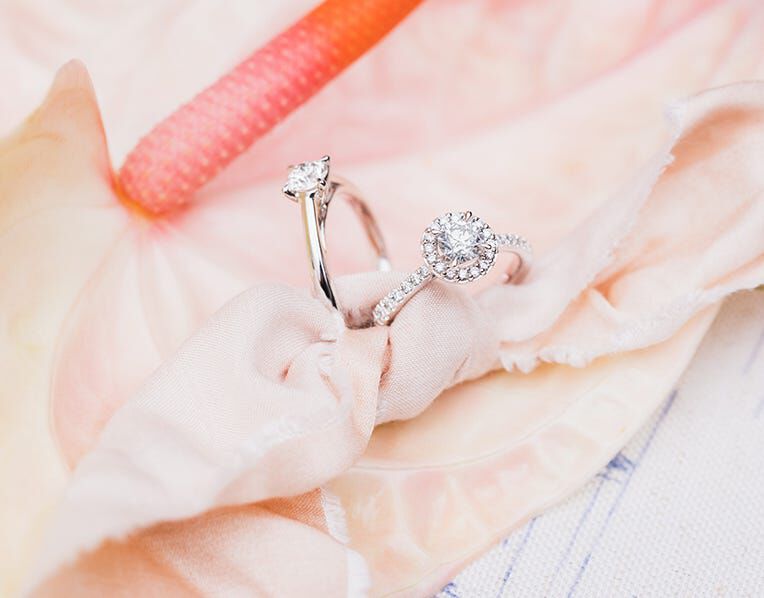
Diamond settings
Diamond settings change the look of a ring as much as the diamond itself. From how much light the stone catches to how secure it feels day to day, here are a few popular settings and what they’re known for.
Claw (prong) setting
A classic choice in 4- or 6-claw styles. It uses minimal metal so more of the diamond is visible, which helps maximise sparkle. A popular option for solitaire rings.
Bezel (rubover) setting
One of the most secure settings, with a smooth metal rim wrapping around the diamond’s edge. It offers extra protection and gives a clean, modern finish.
Pavé setting
Small diamonds are set closely together along the band to create a “paved” sparkle effect. Great if you want extra brilliance beyond the centre stone.
Channel setting
Diamonds sit side by side within a channel of metal, creating a sleek line of sparkle. It’s smooth to wear and especially common on eternity rings and diamond-set shoulders.
If you’d like to understand how different settings affect sparkle, security, and overall style, explore our engagement ring settings guide.
Lab Grown Diamonds or Earth Grown Diamonds
Lab-grown and earth-grown diamonds are both real diamonds. The right choice comes down to budget, rarity, and what matters most to you.
Quick way to decide:
- Choose lab-grown if you want a larger look or higher spec for your budget.
- Choose earth-grown if natural rarity and tradition matter more.
- Either way, prioritise cut quality for sparkle.
If you’d like to go deeper, read our guide to lab-grown vs earth-grown diamonds.
Diamond certification
A certificate (also called a grading report) is an independent document that confirms your diamond’s key details — so you know exactly what you’re buying.
Ready to take the next step? If you’d like help comparing diamonds in person, book an appointment. If you already know the look you want, you can shop engagement rings online anytime.