

WHAT IS ZARATSU POLISHING?
GRAND SEIKO FINISHING EXPLAINED
Zaratsu polishing is a specialised finishing technique used by Grand Seiko to create perfectly smooth, mirror-like surfaces on a watch case.
What sets it apart is not just the shine, but the clarity — the reflections are sharp and distortion-free, even across flat surfaces and crisp edges.
It is one of the defining elements of Grand Seiko design and a key reason why the watches look so precise under light.
How Zaratsu polishing works?
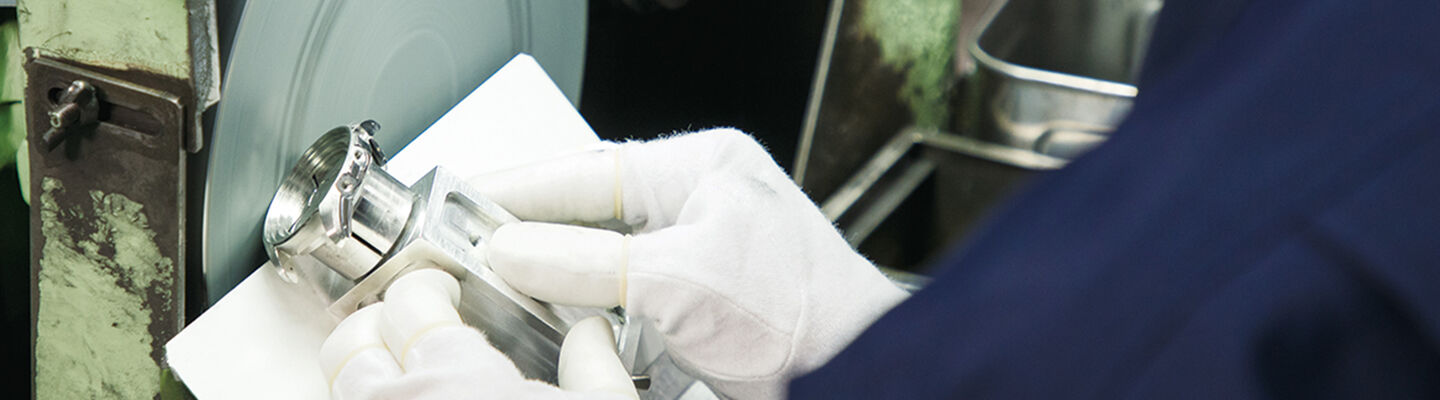
Zaratsu polishing is a method of finishing metal surfaces using a rotating polishing disc. Unlike standard polishing techniques, the surface of the case is pressed flat against the side of the disc rather than the edge.
This allows the watchmaker to create completely flat, highly reflective surfaces without rounding the edges. The result is a mirror finish that remains clean and sharply defined, rather than soft or blurred.
The term “Zaratsu” comes from the name of the machine originally used for this process, and it has since become closely associated with Grand Seiko’s approach to case finishing.
What makes Zaratsu polishing different?
Most polished watch cases reflect light, but they often show slight distortion when viewed closely. Edges may appear softened, and flat surfaces can subtly curve under reflection.
Zaratsu polishing is designed to eliminate this.
The technique produces:
• distortion-free mirror surfaces
• perfectly flat planes
• sharp, well-defined edges
This level of precision changes how the watch interacts with light. Reflections appear crisp and controlled, giving the case a cleaner, more architectural look.

Where do you see Zaratsu polishing on a Grand Seiko?
Zaratsu polishing is most visible on the flat surfaces of the case, particularly along the sides and lugs.
It is often paired with finely brushed surfaces to create contrast. This combination of mirror polish and brushed texture enhances the overall design, allowing different parts of the case to catch light in different ways.
A strong example is the Grand Seiko SBGX263. On this model, the Zaratsu-polished case sides reflect light with complete clarity, while the brushed surfaces add subtle contrast. As the watch moves, the transitions between finishes remain sharp and precise, highlighting the structure of the case.
Why does Zaratsu polishing matter?
Zaratsu polishing is not just about aesthetics. It reflects a broader philosophy of precision and control.
Because the surfaces are completely flat and the edges remain sharp, the watch maintains its structure visually. It looks more deliberate, more refined, and more consistent from every angle.
This is particularly noticeable in natural light. As the watch moves, reflections shift cleanly across the surface rather than bending or diffusing. It gives the case a sense of clarity that is difficult to achieve with standard polishing techniques.

Is Zaratsu polishing done by hand?
Yes. While the process uses specialised machinery, the finishing itself requires a high level of manual skill.
The watchmaker must control the angle and pressure of the case against the polishing disc with precision. Small variations can affect the flatness of the surface or the sharpness of the edges, so consistency is critical.
This level of craftsmanship is part of what makes Zaratsu polishing so closely associated with Grand Seiko.
Is Zaratsu polishing unique to Grand Seiko?
Zaratsu polishing is most strongly associated with Grand Seiko, and the brand is known for executing it to an exceptionally high standard.
While other manufacturers may use similar polishing techniques, Grand Seiko has made it a central part of its design language. It is one of the key elements that gives the watches their distinctive, high-precision appearance.
Zaratsu polishing is easy to overlook at first, but it plays a major role in how a Grand Seiko watch looks and feels.
The clarity of the reflections, the sharpness of the edges, and the way light moves across the case all come back to this technique. It is a detail that reinforces the brand’s focus on precision — not just in timekeeping, but in every visible surface.