


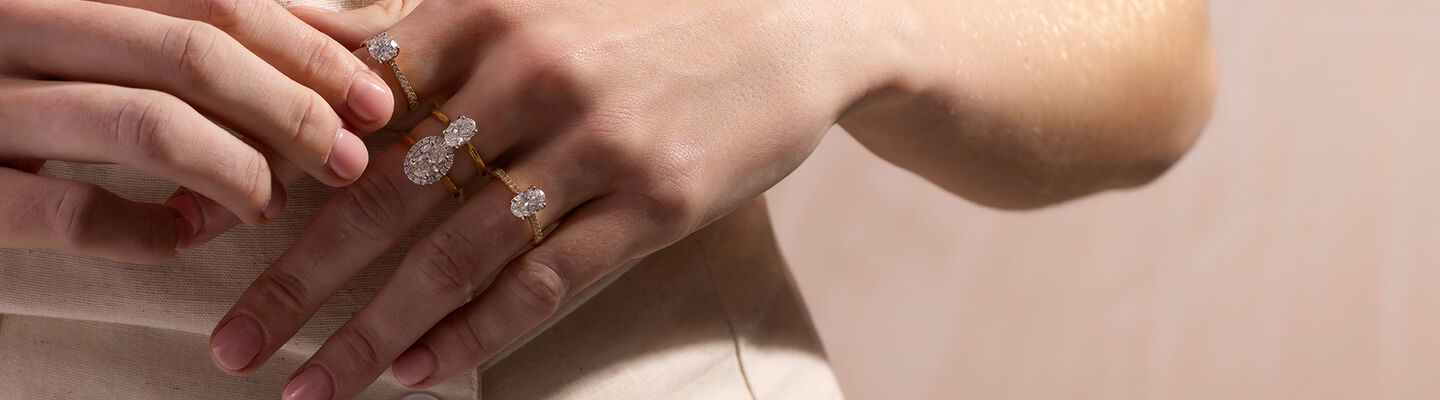
BEST METAL FOR ENGAGEMENT RINGS AND WEDDING BANDS
Choosing a ring metal affects how it looks, how it wears over time, and how much upkeep it needs.
The main options for engagement rings and wedding bands are platinum, white gold, yellow gold, and rose gold.
Not sure where to start? Our engagement ring buying guide explains everything you need to know before choosing a ring.

Platinum
Platinum is naturally white and very hard-wearing, which is why it’s a common choice for engagement rings—especially for settings that need strong, secure claws.
Choose platinum if you want:
• A naturally white finish (no plating)
• Strong everyday wear and long-term durability
• A premium, weightier feel on the hand
Good to know: platinum can develop a soft patina over time. It’s normal, and it can be polished if you prefer a brighter finish.
White Gold
White gold is gold mixed with other metals to create a lighter colour, then finished with rhodium plating to give it a bright white look. Over time, that plating can wear and may need to be reapplied to restore the original brightness.
Choose white gold if you want:
• A bright white look that pairs well with diamonds
• A lower upfront cost than platinum
• You’re happy with occasional maintenance (re-plating)
Good to know: White gold’s bright finish comes from rhodium plating, which can wear over time and may need re-plating to keep it looking crisp white.


Yellow Gold
Yellow gold is the classic choice. It gives diamonds a warm contrast and is easy to pair with traditional wedding bands and other jewellery.
Choose yellow gold if you want:
• A timeless look that doesn’t rely on plating for colour
• A warm tone that works with most skin tones
• Easy matching with wedding rings and everyday jewellery
Good to know: Yellow gold shows fine surface marks over time like any precious metal, but it doesn’t rely on plating for its colour.
Rose Gold
Rose gold has a soft pink tone created by the gold alloy mix. It’s popular if you want something warm-toned but slightly less traditional than yellow gold, and it can look especially flattering in vintage-inspired or modern minimal settings.
Choose rose gold if you want:
• A warm pink tone and softer contrast against diamonds
• A modern look that still feels classic
• A metal that pairs well with mixed-metal stacks
Good to know: Rose gold gets its colour from the alloy mix, so the exact shade can vary slightly between designs.

What to know before you choose
Durability and daily wear
All precious metals will show some signs of wear over time—especially on rings worn every day. If you’re hard on jewellery (gym, hands-on work, frequent handwashing), prioritise a metal and finish that you won’t mind seeing natural wear on.
Rhodium plating (white gold)
White gold’s bright finish comes from rhodium plating. If you love that crisp white look, plan for re-plating as normal upkeep.
Resizing
Most plain bands and many engagement rings can be resized, but certain designs can limit this (for example, rings with stones set all the way around the band). If you’re unsure about sizing, start with our ring size guide.
Diamond Promise (care plan)
If included with your ring, the Diamond Promise is relevant here because it covers practical upkeep—such as ongoing cleaning/care advice, and (where applicable) your first rhodium re-plate/polish and first resize.

Which metal should you choose?
• Choose platinum if you want the most durable, low-maintenance white metal.
• Choose white gold if you want a bright white finish and you’re fine with periodic re-plating.
• Choose yellow gold if you want a timeless warm tone that’s easy to match.
• Choose rose gold if you want a softer warm tone with a modern feel.
Ready to narrow it down? Shop engagement rings by metal: platinum, white gold, yellow gold, rose gold.
Shopping for bands too? Browse wedding rings in platinum, white gold, yellow gold, rose gold.